Digitised Hiring (Part 2/2)


Most recruiters don’t set out to be order-takers. It doesn’t matter how fast they can source candidates, when there’s no clear process for them to run, it happens by default.
That’s one reason why, in part 1, I argued for process before digitisation and automation. Here, I want to show you the difference between a recruitment process that starts fast versus slow, and how the latter ultimately gets recruiters to the finish line sooner and in much better shape.
The current way
A hiring manager, let’s call him Hal, raises a role. His recruiter, “Rihanna”, takes the brief over a rushed call with no structure behind it, but hangs up feeling like she’s got just enough to work with: a job description, a few must-haves and a budget.
The job goes live.
Hundreds of applications hit the ATS. Rhi works through them, giving them a quick rating before calling the 30 who look okay on paper. Even at 15 minutes each, that’s 7.5 hours on the phone, before she’s ever logged her notes.
Now CVs start arriving in Hal’s inbox. For each candidate, Rhi has pulled together a summary - that’s between the sourcing, screening and follow-ups fighting for her time. There’s no set format to follow, so Rhi has to decide what to include each time and Hal ends up with summaries that don’t cover the same points.
This works okay to begin with, until Hal is 15 CVs deep and has to pick who to interview. Now he’s gotta open 15 tabs and cross-reference Rhi’s notes across that same trail of emails.
And when Hal says no to most of the candidates, Rhi is left scratching her head. So she goes again. More sourcing, more CVs, more back-and-forth.
Each rejection does the work the intake should’ve done. Rhi learns a little more about what Hal wants, but only after another candidate has been ruled out. Meanwhile, Hal has a fresh batch of CVs to compare with the 10 people he interviewed weeks ago. His feedback slows and Rhi has to chase.
The next role comes in but this time Hal works with a different recruiter. Does the next search go any better? Nope. Because there’s no standard way of working, so every recruiter runs the process a little differently and Hal has to adjust to a different approach every time.
The alternative way
The next role starts with a conversation too. But what if this time, rather than a wish list of skills, Hal and Rhi agreed on what the new hire would need to achieve in their first year, and what evidence to look for that might suggest they could do it?
Those questions give both sides something they didn’t have before - an agreed way to judge the candidates who follow. This is performance-based hiring.
Before Perpetual Hire adds speed, it adds structure. It turns that agreement into a brief Hal and Rhi sign off on before sourcing begins. Rhi leads the conversation and challenges assumptions; when candidates come through, they’ll have a benchmark to return to.
Rhi still makes the first cut. She rules out the obvious mismatches and invites the strongest 40 into Perpetual Hire. Here they answer questions tied to what Rhi and Hal agreed on during the intake.
They do it in their own time; some decide the role isn’t for them, and Rhi knows that before she picks up the phone.
Of the 40 Rhi invites, she can expect around 32 completed applications within two days. That’s based on Perpetual Hire’s data: around 80% of invited candidates finish their applications in that time.
These applications also give Rhi enough data to know she's speaking to suitable candidates. And because she doesn't have to screen hundreds, she has more time to spend with the right ones.
And when it’s time to pick who to interview, Hal no longer has to piece together notes lost across a trail of emails. Instead, Hal opens a dashboard. Here he can see each candidate side-by-side, assessed and scored against the same 16 data points, and how committed each person is to the process.
Shortlist Dashboard (image)
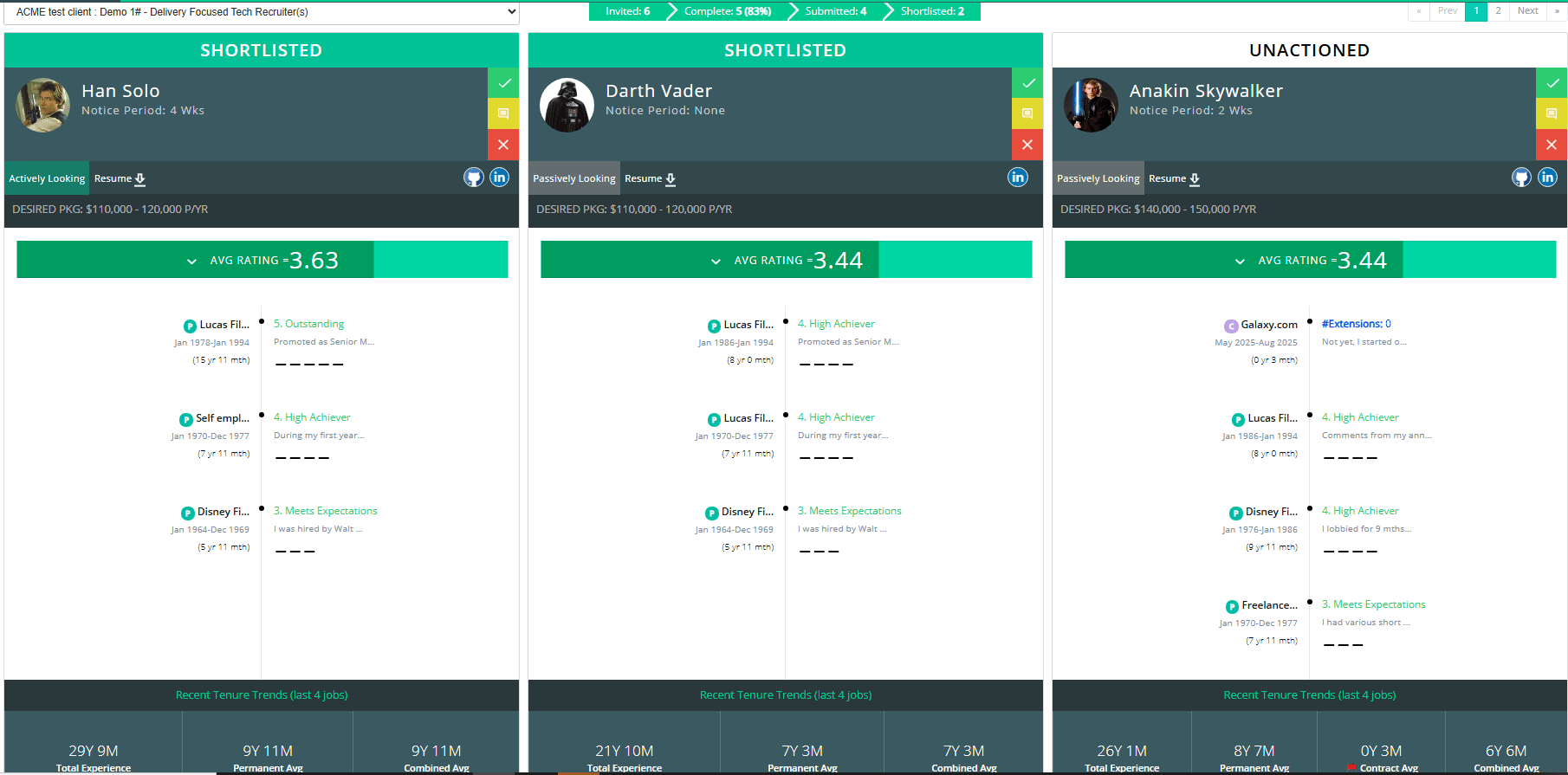
When Hal starts rejecting candidates, Rhi has a better question to ask than “Should I send more CVs?” Like, what didn’t fit the brief? Was the evidence missing? Or even, has the role changed?
That’s a different conversation.
With Perpetual Hire, recruiters like Rhi save approximately 98 hours per month across the whole process. Fewer screening calls with unsuitable candidates, less time typing up interview notes and less chasing decisions leave more time to help Hal make one.
And this time, when the next role comes in, Hal knows what to expect and Rhi can run the same process again. The best part? Rhi’s colleague can pick it up too and nothing changes.
The recruiter who runs this process isn't an order-taker. They're the person in the room who knows what great hiring looks like and has the data to back it up.
_ _ _ _ _ _ _ _ _ _ _ _ _ _ _ _ _ _ _ _ _ _ _ _ _ _ _ _ _ _ _ _ _ _ _ _ _ _ _ _ _ _ _ _